
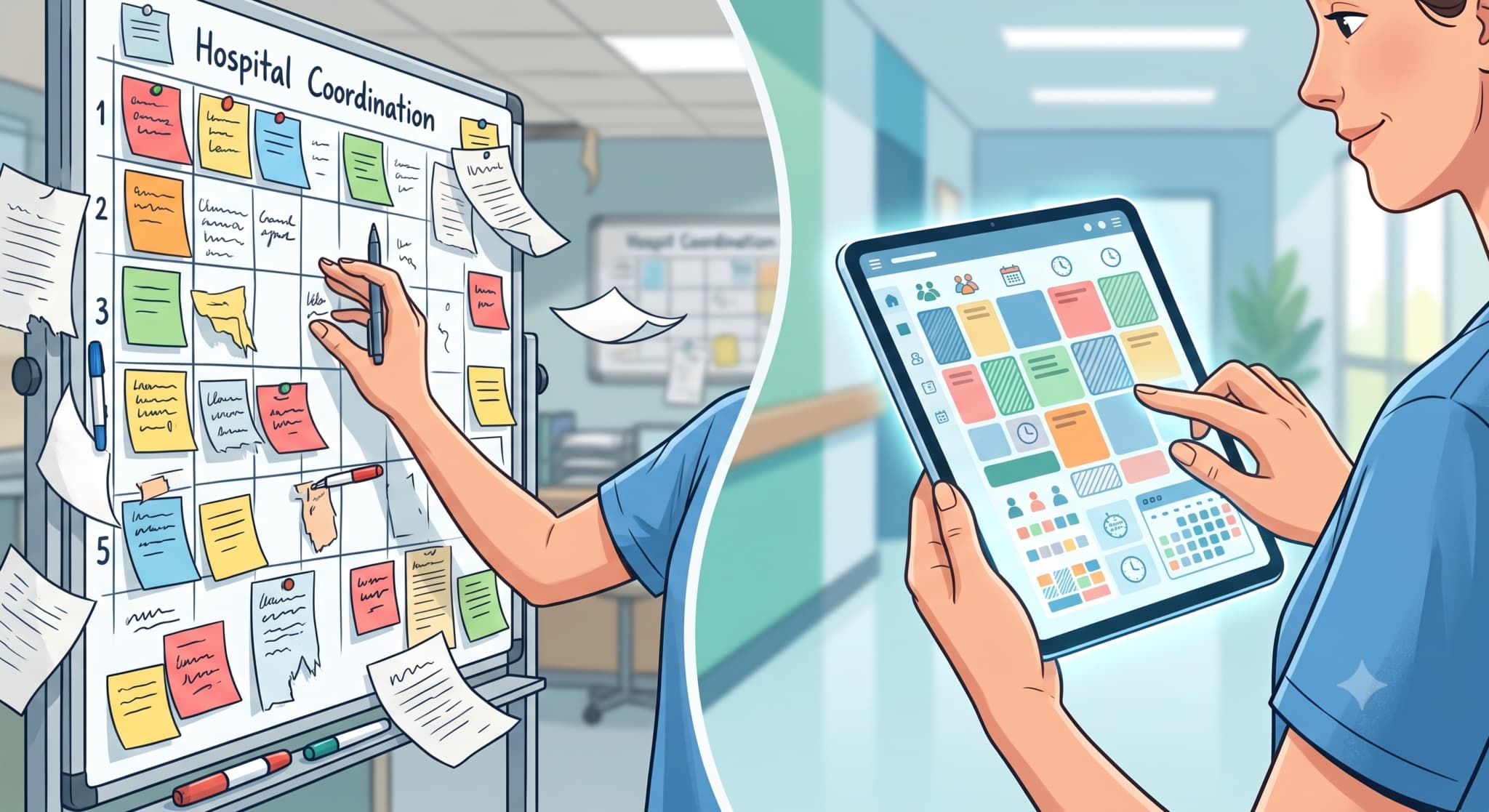
Healthcare organizations today operate in increasingly demanding environments. Rising patient expectations, workforce shortages, stricter compliance requirements, and the growing complexity of operations have made staff scheduling more challenging than ever before.
For many hospitals, manual rostering methods such as spreadsheets, paper schedules, and fragmented communication channels are no longer sustainable. While this may appear manageable for smaller teams, the process quickly becomes complex in large healthcare environments involving multiple departments, teams, staff groups, and rotating shifts.
In 2026, healthcare institutions are increasingly turning towards digital workforce management solutions to improve operational efficiency, staff satisfaction, and patient care outcomes.
Some of the common challenges hospitals face with manual rostering include:
1. Time Consuming Administrative Work
Creating schedules manually requires significant administrative effort. Managers often spend hours balancing coverage needs, staff availability, leave and shift requests, compliance requirements, overtime and more.
Any last-minute changes such as medical leave, urgent manpower shortages, or unexpected surges in patient occupancy can further disrupt schedules and require additional manual adjustments.
Based on our experience, healthcare managers spend up to 44 hours per month on manual workforce management tasks such as those listed below:
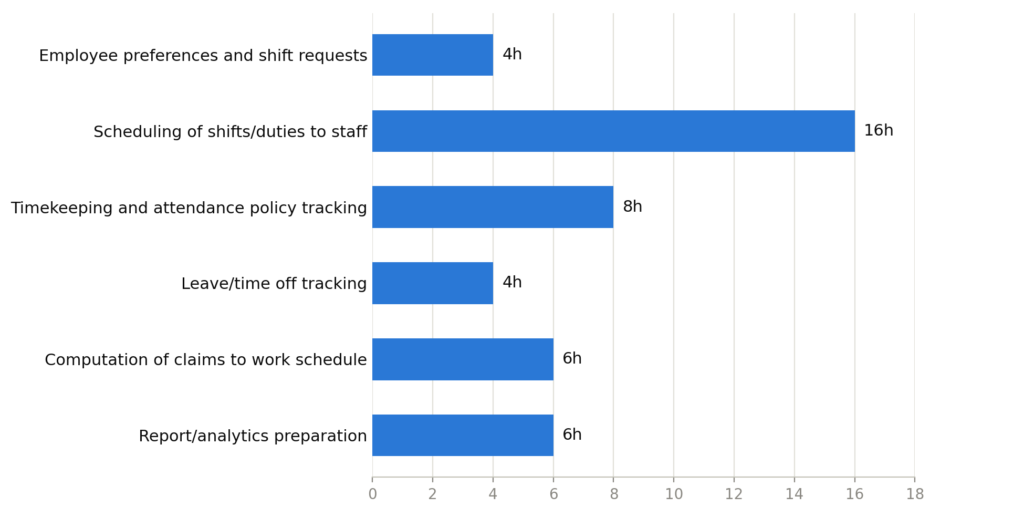
As a result, they often spend a large portion of their time handling administrative scheduling tasks instead of focusing on higher-value responsibilities such as patient care, workforce development, or service quality improvements.
Manual rostering also increases dependency on specific individuals who are familiar with the scheduling process. If key personnel are unavailable, the continuity and efficiency of roster planning may be affected.
2. Increased Risk of Scheduling Errors
One common issue is understaffing, where there are insufficient staff scheduled to meet operational demand. This can place significant pressure on staff by increasing fatigue and impacting the quality and timeliness of patient care.
When hospitals experience staffing shortages, managers often rely on overtime shifts. While overtime may temporarily resolve manpower gaps, excessive reliance on overtime can substantially increase labor costs over time while also contributing to employee burnout and higher turnover.
On the other hand, overstaffing can also create operational inefficiencies by increasing unnecessary labor expenses, under utilization of the workforce, and lower productivity.
Beyond staffing levels, non-compliance with labor laws, internal policies, and union agreements is another major risk, and one that healthcare organizations work hard to avoid.
Common compliance risks include:
- Exceeding maximum working hours
- Insufficient rest periods between shifts
- Low nurse-to-patient ratios
- Improper allocation of night, weekend, or public holiday shifts
These compliance issues can expose hospitals to financial penalties, operational disruptions, and employee grievances
3. Limited Visibility across Operations
When information is fragmented across multiple spreadsheets, systems, and communication channels, it becomes difficult for operations leaders to gain a real-time view of workforce activities across multiple teams or departments.
Without centralized visibility, hospitals cannot proactively balance staffing levels across multiple teams. For example, Ward A might have a staffing shortage, while Ward B has a surplus for the same shift. Instead of redeploying available staff from Ward B to Ward A, another employee may be asked to work overtime unnecessarily.
This also makes long-term strategic planning difficult. When data is siloed, leadership cannot easily track trends such as which departments have the highest turnover or where labor budgets are being consistently exceeded.
Limited visibility can also slow down response times during operational disruptions such as sudden spikes in patient admissions, unexpected absenteeism, or emergency situations. Managers may need to manually contact multiple departments to identify available manpower, delaying operational coordination.
Conclusion
Manual rostering processes may have worked in the past, but the growing complexity of modern healthcare operations requires a more scalable and intelligent approach.
Automated rostering and workforce optimization solutions help healthcare organizations move beyond reactive scheduling by improving workforce visibility, reducing administrative burden, minimizing scheduling errors, and enabling more efficient manpower planning.
More importantly, effective workforce management is no longer just about filling shifts. It plays a direct role in supporting staff wellbeing, operational efficiency, cost control, and ultimately, the quality of patient care delivered. In 2026, hospitals that embrace smarter workforce management technologies will be better positioned to build more sustainable healthcare operations for the future.
Workforce Optimizer is currently working with 20+ hospitals in Singapore to automate their rosters, which helps to reduce labor costs, improve manager productivity, and reduce staff turnover. Speak to our team today to find out how.







 622 Lor 1, Toa Payoh
  sales@workforceoptimizer.com