

For many organizations, labor is the single largest operating expense. Yet, despite investing heavily in their workforce, many still rely on manual processes, spreadsheets, and reactive decision-making to manage day-to-day operations. Simply filling slots on a calendar isn’t enough to protect your margins or keep your frontline happy.
As businesses grow, so does the complexity of managing people. Multiple locations, rotating shifts, changing demand, compliance requirements, employee expectations, and labor shortages all make workforce planning increasingly difficult.
This is where workforce optimization comes in.
Rather than simply creating schedules or tracking attendance, workforce optimization is about ensuring the right people, with the right skills, are deployed at the right place and at the right time.
It enables organizations to make smarter workforce decisions using automation, data, and real-time visibility.
Workforce Optimization Goes Beyond Scheduling
Many people assume workforce optimization is simply another term for employee scheduling or rostering. While scheduling is an important component, it represents only one part of a much larger workforce strategy.
A modern workforce optimization approach integrates multiple workforce functions into a single ecosystem. These include workforce planning, scheduling, time and attendance, leave management, labor forecasting, compliance monitoring, workforce analytics, and employee self-service.
Instead of managing these processes independently through different systems or spreadsheets, organizations gain a centralized view of their workforce operations.
More importantly, workforce optimization connects workforce planning with business objectives. Rather than asking, “Who is available to work?”, organizations begin asking, “How can we deploy our workforce in the most effective way to meet operational demand?”
Why Workforce Optimization Matters
Many operational challenges that organizations experience every day are not caused by a lack of employees, they are caused by poor workforce utilization. For example:
- One department may be struggling with understaffing while another has excess capacity
- Employees may be working excessive overtime while qualified part-time staff remain available
- Peak demand periods may be consistently understaffed because schedules are based on historical habits rather than actual business demand
- Unhappy staff with rostering bias from unfair distribution of weekend and public holiday shifts
With a smart workforce management system, these issues can be easily avoided. Workforce optimization helps organizations move away from reactive workforce management by providing the tools and insights needed to plan proactively, allocate resources effectively, and respond quickly when operational conditions change.
The Key Components of Workforce Optimization
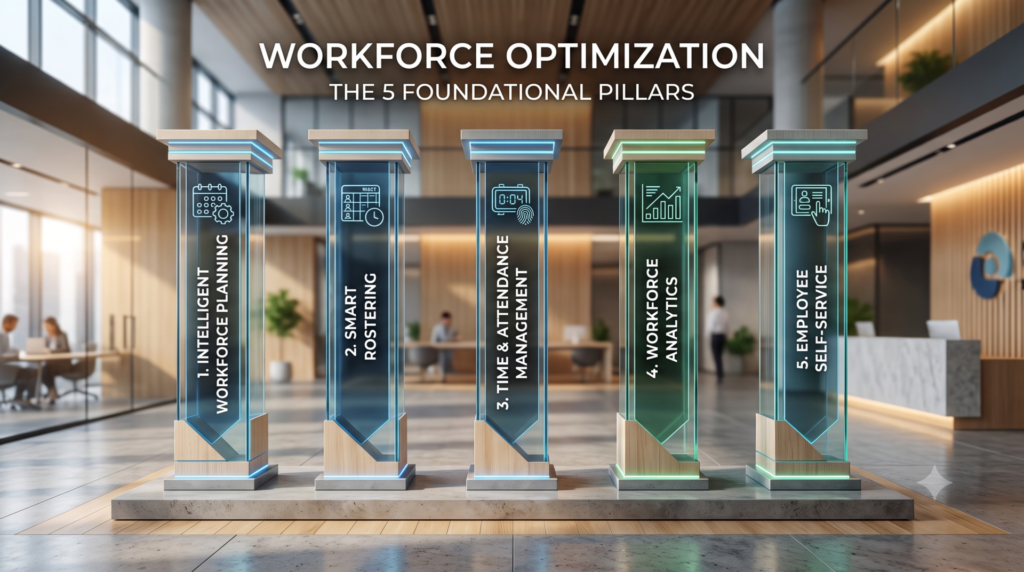
- Intelligent Workforce Planning – Analyze operational trends such as customer traffic, sales data, patient admissions, or production volumes to determine staffing requirements more accurately. Then schedule employees according to actual demand rather than assumptions
- Smart Rostering – Automate this by considering employee availability, qualifications, labor regulations, shift preferences, operational requirements, and staffing rules simultaneously. This reduces manual effort while helping ensure schedules remain fair, compliant, and operationally efficient
- Time and Attendance Management – Capture attendance digitally to understand when employees actually begin and finish work, identify attendance trends, monitor overtime, and improve payroll accuracy (overtime and allowances)
- Workforce Analytics – Turn operational data into actionable insights with monitoring key workforce metrics such as overtime trends, labor costs, absenteeism, productivity, and compliance adherence
- Employee Self Service – Allow employees to manage routine workforce activities independently, including viewing schedules, requesting leave, swapping shifts, updating preferences/availability
Conclusion
Workforce optimization is about far more than scheduling employees or tracking attendance. It is a strategic approach to ensuring organizations have the right people, with the right skills, in the right place, at the right time, while balancing operational efficiency, labor costs, compliance, and employee wellbeing.
As workforce challenges continue to grow more complex, organizations that embrace data-driven workforce optimization will be better equipped to respond and build more resilient operations for the future.
Are you looking to optimize your workforce as well? Speak to our team today to find out how







 622 Lor 1, Toa Payoh
  sales@workforceoptimizer.com