
As operations become more complex and distributed in service-based industries, the need for real-time access to workforce planning has shifted from being a “nice-to-have” to an operational necessity.
One of the most significant shifts has been the rise of mobile workforce management. In 2026, relying solely on web based systems is no longer sufficient for organizations that operate around the clock, across multiple locations, and with constantly changing staffing needs.
The Shift Towards Real-Time Workforce Operations
Traditional workforce management systems were largely designed for static environments where schedules were planned in advance and changes were minimal. However, modern field-based operations are dynamic.
Staffing requirements can change within minutes due to last minute staff absenteeism or sudden demand spikes. In such environments, managers and employees need the ability to access and act on workforce information instantly, regardless of location.
For example, a single unplanned absence during a peak shift may require immediate redeployment of staff or approval of overtime. If managers are tied to desktop systems, response times slow down significantly.
Mobile workforce management enables this shift by bringing scheduling, communication, approvals, and attendance tracking directly to mobile devices.
Reducing Administrative Burden on Managers
One of the biggest challenges in workforce planning and management is the administrative load placed on managers and supervisors, who are responsible for handling a wide range of workforce-related tasks throughout the day.
Without mobile app access, even simple operational tasks require logging into desktop systems or repeated follow-ups through calls and messaging channels.
A mobile workforce management app gives managers greater flexibility to handle these responsibilities wherever they are. They can review and approve overtime, leave, or shift swap requests as they come in, rather than allowing requests to build up in a queue. They can also monitor attendance in real time and quickly identify issues such as missed clock-ins, late arrivals, or unexpected absences.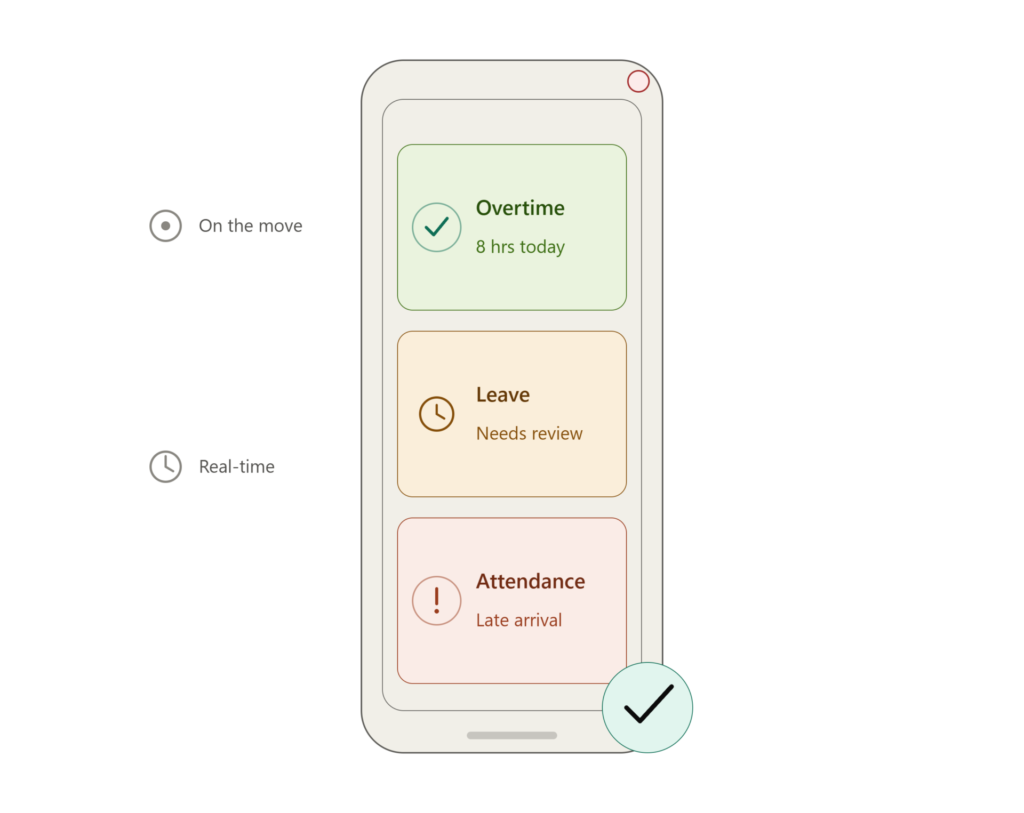 This is particularly valuable in environments where managers are not always sitting in front of a computer and need to make workforce decisions while moving between different locations or departments.
Managers can thus shift their focus away from administrative tasks and spend more time on higher-value operational responsibilities such as coaching, performance oversight, or service delivery improvement.
Empowering Employees with Self-Service Capabilities
Employee expectations have evolved significantly. Today’s workforce values transparency, flexibility, and control over their schedules, especially in shift-based environments.
A mobile workforce management app gives employees the ability to manage many of these day-to-day activities directly from their phones. Instead of waiting for a manager to respond or logging into a desktop system, employees can access their schedules, submit requests, and stay updated wherever they are. Key self-service capabilities can include:
- View schedules anytime, anywhere
- Receive real-time shift updates
- Request leave or shift preferences
- Swap shifts with colleagues
- Clock in and out
- Receive messages from managers
These capabilities give employees greater visibility into their working schedules and more control over how they manage their time. For example, being able to view schedules from anywhere means employees can plan their personal commitments around their shifts, while real-time notifications ensure they are aware of any last-minute changes.
Providing this level of autonomy significantly improves the employee experience. When they feel they have the tools to manage their work-life balance easily, they are more likely to stay with the organization long-term.
Conclusion
Workforce management on mobile applications is no longer just an extension of traditional scheduling systems, it has become a core requirement for modern, distributed operations.
In 2026, organizations that adopt mobile-first workforce management will be better positioned to respond quickly to operational changes, improve employee experience, and maintain consistent service delivery across locations.
Simply put, mobility Is no longer optional, it is fundamental to effective workforce management.
Ready to mobilize your workforce? Workforce Optimizer’s mobile app is designed to handle the complexities of the modern service industry. Book a Demo today to see how we can help you streamline your operations from the palm of your hand.







 622 Lor 1, Toa Payoh
  sales@workforceoptimizer.com