

Workforce planning plays a critical role in ensuring smooth day-to-day operations, yet it is often underestimated. While scheduling may appear to be a purely administrative function, ineffective workforce planning can create significant operational, financial, and employee-related challenges over time.
Many organizations focus only on the immediate impact of staffing shortages or overtime costs. However, the true cost of poor workforce planning often extends far beyond what is immediately visible.
In 2026, as labor costs continue to rise and workforce expectations evolve, organizations are increasingly recognizing the importance of building more strategic and data-driven workforce planning processes.
1. Increased Labor Costs
One of the most immediate consequences of poor workforce planning is higher labor costs due to excessive overtime.
When staffing levels are not accurately aligned with operational demand, organizations often rely on last-minute overtime shifts to fill manpower gaps and maintain operations. This means paying premium overtime rates (often 1.5x or 2x the base wage).
While overtime may temporarily solve short-term staffing issues in industries with 24/7 operations such as healthcare, logistics, retail, and field services, these costs can accumulate quickly across departments and locations.
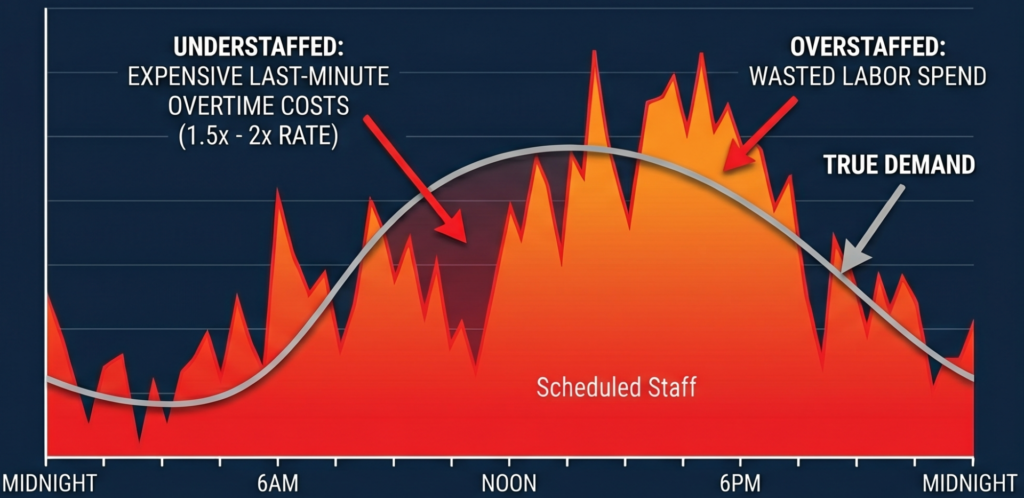
Poor workforce visibility may also lead to overstaffing in certain areas while other departments remain understaffed, resulting in inefficient labor utilization and unnecessary payroll expenses.
2. Employee Burnout and Higher Turnover
Poor workforce planning can place considerable strain on employees.
Frequent understaffing, inconsistent scheduling, excessive overtime, and last-minute shift changes often increase stress and fatigue among staff. Over time, this can negatively impact employee morale, engagement, and overall job satisfaction.
Employees who experience ongoing scheduling instability may feel that workloads are unfairly distributed or that their work-life balance is being compromised.
This becomes especially problematic in industries already facing workforce shortages, where employee retention is critical. High turnover not only affects operational continuity but also increases recruitment, onboarding, and training costs for organizations.
3. Compliance and Operational Risks
Organizations operating in shift-based environments must often comply with labor laws, internal workforce policies, or union agreements.
Poor workforce planning increases the likelihood of:
- Excessive working hours
- Insufficient rest periods
- Unapproved overtime
- Improper staffing ratios
- Scheduling conflicts
When a manager is frantically trying to fill a shift on a spreadsheet, they rarely have the time to audit whether that employee has had the legally required rest between shifts, or if they are exceeding weekly caps. These issues can expose organizations to compliance violations, employee grievances, financial penalties, and reputational risks.
Manual planning processes also make it more difficult to maintain accurate workforce records and audit trails, particularly when schedules are frequently adjusted through informal communication methods.
Conclusion
The costs of poor workforce planning are often much greater than organizations initially realize. As workforce operations become more dynamic and labor challenges continue to evolve, organizations can no longer afford to rely on reactive or manual planning processes.
In 2026, effective workforce planning is not just about scheduling shifts, it is about building a more efficient, resilient, and sustainable operation that supports both business performance and employee experience.
Are hidden labor costs quietly eroding your profitability? Workforce Optimizer helps organizations leverage data to build smarter, compliant, and cost-effective rosters. Contact our team today to learn more.






 622 Lor 1, Toa Payoh
  sales@workforceoptimizer.com